Case study · Sponsorship experience design · Mashhad, 2023
In Praise of the Longest Night
An evening built around the oldest night in the Persian calendar, funded by six brands and sold to nobody. We divided the invitations between the six and let each one fill its share with the clients it most wanted to thank. Three hundred and sixty people came. Ninety-five per cent of everyone invited said yes.
The brief
- Event brand
- YALDA NIGHT
- Format created by
- Banaye Bartar Group
- Experience design, direction & host
- Ehsan Kaykhah — founder & CEO, Banaye Bartar
- Idea & concept design
- Dr. Azadeh Tashakkori
- Where
- Homa 1 Hotel, Ahmadabad — Mashhad, Iran
- When
- Yalda — the winter solstice, the longest night of the Persian year. Three editions; the one documented here is the third, 21 December 2023
- Guests
- 360 architects, developers and investors. By private invitation only
- Sponsors
- 6, selected and filtered
- Paid by guests
- Nothing
- Funded by
- The six sponsors, in full
- Sold on the night
- Nothing
At a glance
360 guests
6 sponsors
95% acceptance
0 sold
0 paid by guests
The setting
Yalda is the longest night of the year — the winter solstice, marked in Iran for several thousand years and still kept in almost every household. Families gather at the home of the eldest member and stay awake through the dark. There is a table of red fruit, because red is the colour of the returning sun: pomegranate, watermelon, nuts, dried fruit. And at some point in the night somebody opens Hafez, the fourteenth-century poet whose collected verse sits in Iranian homes the way a family Bible once sat in American ones. Each person makes a silent wish, the book is opened at random, and the poem that appears is read aloud as the answer.
Nothing is sold on Yalda. Nobody is converted. There is no religious observance and no gift exchange. It is a night about outlasting the darkness in company, and then eating.
The industry that filled this particular room was Iran's building sector, in Mashhad — the country's second city. Architects, developers and investors on one side; manufacturers of building materials on the other. And for forty years those manufacturers have had exactly two ways to reach the first group: rent space at an exhibition, or send a gift at the end of the year.
The default
Sponsorship in this market is sold the same way it is sold in most markets, which is to say it is sold as surface area.
A sponsorship deck arrives with tiers. Gold, silver, bronze. What separates them is the size of a logo and the number of surfaces it appears on: the backdrop, the invitation card, the billboard outside, the printed programme, the screen between segments, a branded table near the door, and — at the top tier — a few minutes on stage. The sponsor pays, the logo is placed, the event happens, and afterwards somebody sends a report counting how many people were exposed to the mark.
This is a reasonable model, and for the right brand it is the correct one. A consumer brand that genuinely needs strangers to learn its name is buying attention in bulk, and buying it efficiently.
It is simply not the right instrument for a business-to-business brand, for a specific and structural reason. A materials manufacturer does not have an awareness problem. It has a depth problem. Its revenue is concentrated in a few dozen accounts — the architects who specify it, the developers who buy it in volume, the investors who fund the projects it ends up inside. Those people already know the brand. They are not going to learn it from a banner, and they are the least likely people in the country to walk up to a stand at a trade fair and introduce themselves.
So the sponsor buys reach among strangers to solve a problem that only exists among people it already knows. And on the night itself its team has no role at all. They are guests at somebody else's event with a logo hanging above them, standing near their branded table, waiting for a conversation that has not been designed to happen.
There is a second problem underneath the first, and it is the one that ends most sponsorship budgets. Nothing that happens on that night can be traced back to a name. When the year turns difficult, the line item that cannot be attributed is the line item that gets cut.
Every sponsor arrived to host its own most important clients — and left having met the most important clients of five other brands.
Any of those six brands could have taken its key accounts to dinner. What a single brand does not usually have is the setting: an occasion built around a night three thousand years older than any of them, held to a standard people dress for, with no agenda attached. Providing that was our part of the work — a facility, designed around an old ritual, and then shared.
The second effect mattered as much as the first. Because the room was assembled from six separate guest lists, every sponsor also met the senior clients and partners of the other five. Six carefully chosen networks were introduced to one another in a single evening, in a warm and informal setting, with nobody selling anything. A brand came for its own relationships and went home with a wider professional circle than it had arrived with.
So we stopped selling exposure and started selling hosting.
The scarcity being answered here is the one Thirty Nights of Nowruz answers too — a host's attention — and the two cases reach opposite formats from it. The breaker at the end of the moves below is where that is reconciled.
The moves
01
Divide the guest list among the sponsors.
The capacity was fixed and, relative to the market, deliberately small. The obvious move is to build the list yourself and sell exposure to it. We did the opposite: we split the invitations six ways and handed each sponsor its share. Each brand decided personally who filled it — the key accounts, the long-term partners, the client they had been meaning to thank for two years. We set the profile and nothing else: architect, developer, investor.
That single decision is the whole case. When the sponsor chooses the guest, three things change at once. The sponsor stops buying exposure to strangers and starts buying an occasion with a named person it already has revenue with. The guest stops being an anonymous attendee and arrives already attached to someone in the room. And we stop being an audience owner renting out access, and become something the industry was short of — a host with nothing to sell.
Three hundred and sixty people, and not one of them invited by the organiser. 02
Make the sponsor a host, not an advertiser.
On the night, the six brands were not sponsors in the usual sense. They were hosts, receiving their own guests, in a house we had built for them.
A brand that is hosting behaves visibly differently from a brand that is exhibiting. It greets people at the door. It introduces one guest to another. It notices when somebody is standing alone. It has a job — which is more than most sponsors are given at most events, and it is the reason a sponsor's team so often has very little to do once the doors open.
The guest reads that difference in the first thirty seconds, and reads it correctly. My supplier invited me to something, and is looking after me here, and is not going to ask me for anything tonight. No logo placement has ever produced that sentence.
03
Cap the sponsors at six.
An exhibition's business model rewards volume: more exhibitors, more revenue, and the organiser is structurally incentivised to keep selling until the hall is full. The cost of that is invisible to the organiser and obvious to everyone else — a brand that is one of ninety is in a list, not in a category.
We took six, and filtered them. Six brands can each hold a meaningful share of a room of three hundred and sixty. Six can each be understood, remembered and distinguished by a guest walking out at midnight. Ninety cannot. The scarcity was not a limitation we apologised for; it was the product we were selling, and it is the reason the format could serve serious brands rather than simply fill a room.
04
Design the arrival before you design the programme.
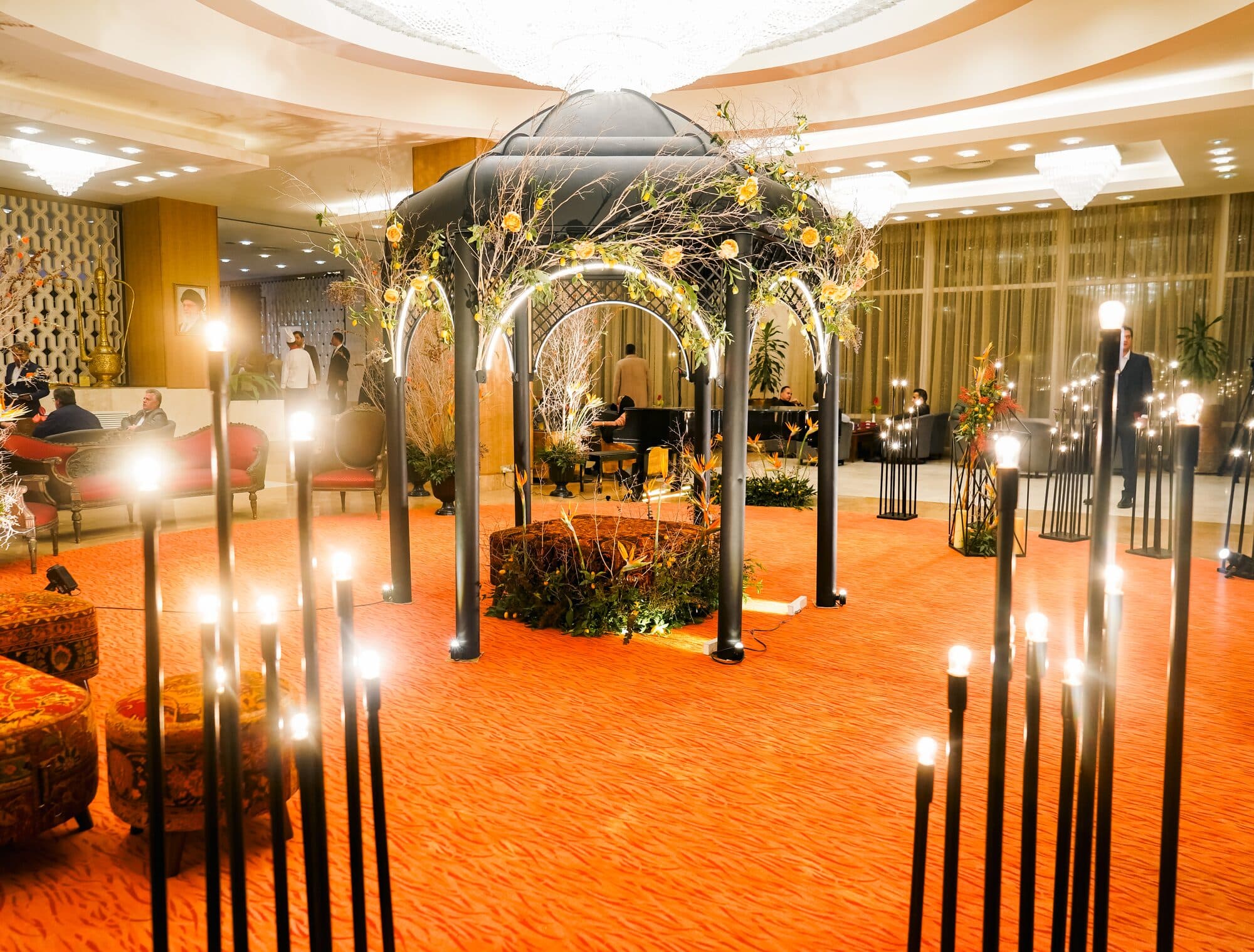
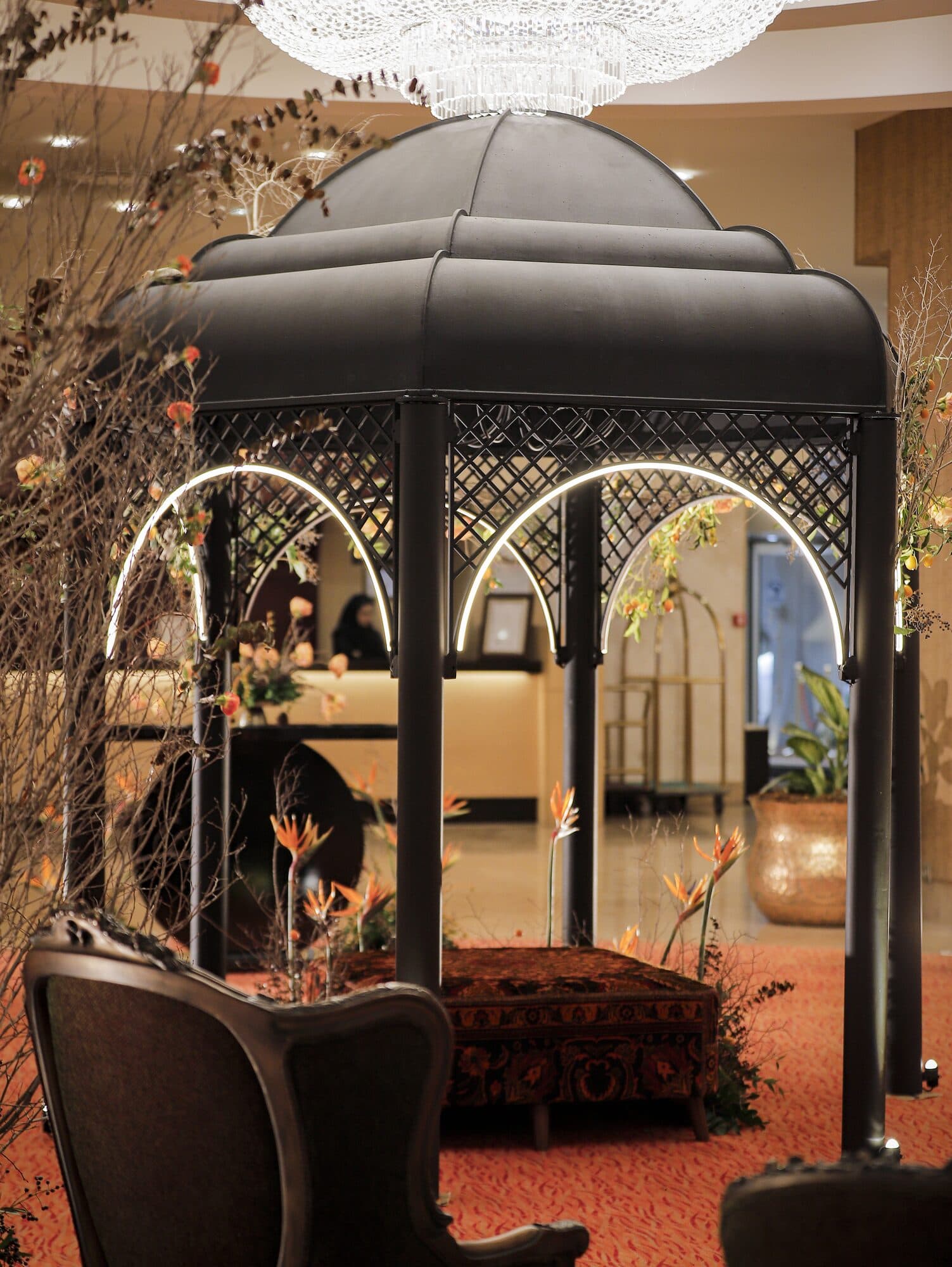
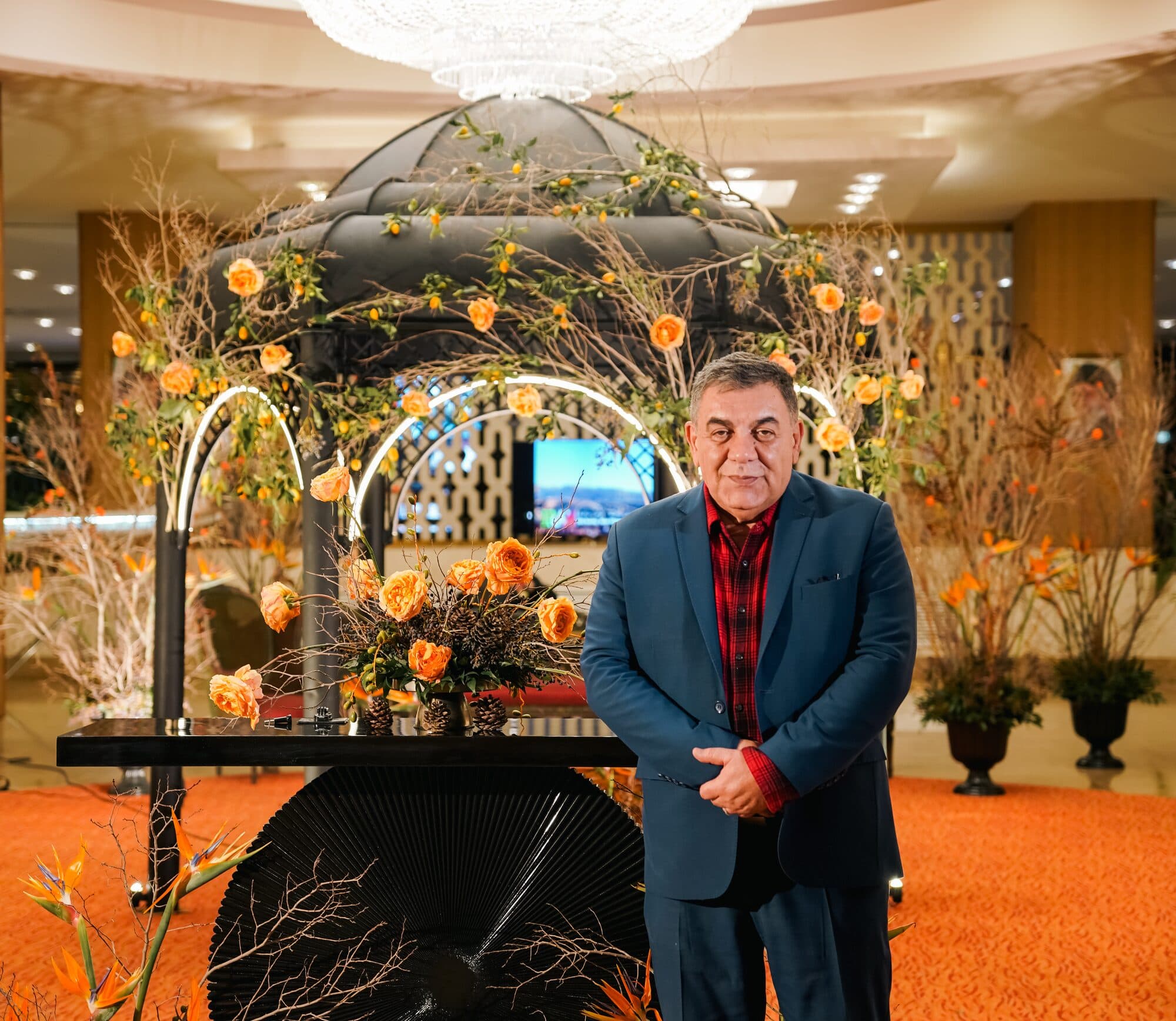
Guests were received in the hotel lobby, and the first thing they met was not a registration desk and a step-and-repeat banner covered in logos. It was the tomb of Hafez.
Dr. Azadeh Tashakkori designed it and we built it: a full recreation of the monument that stands over the poet's grave at the Hafezieh in Shiraz — the actual place Iranians travel to, and the reason a book of Hafez is opened on Yalda night at all. It stood at the entrance, and guests were photographed at it as they arrived.
A guest forms an opinion of an evening in about four seconds, and forms it at the door, before anyone has spoken. Everything we intended the night to be — cultural rather than commercial, built rather than rented, made for them rather than at them — the lobby said first, silently, in an object. When the evening's arguments arrived later, they were confirming an impression instead of trying to create one.
The arrival, Yalda Night, December 2023Music, no speech. 05
Programme a night, not an agenda.
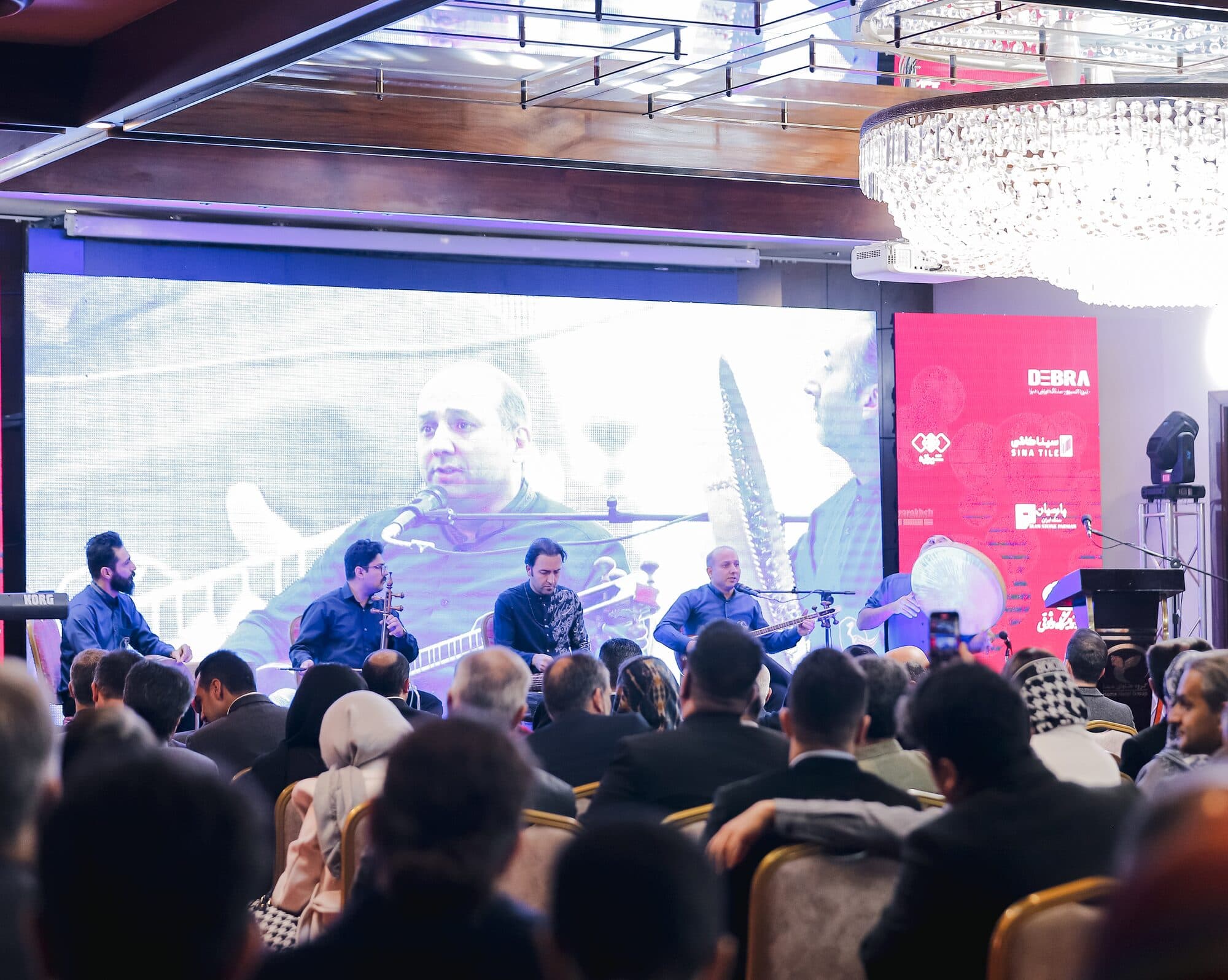
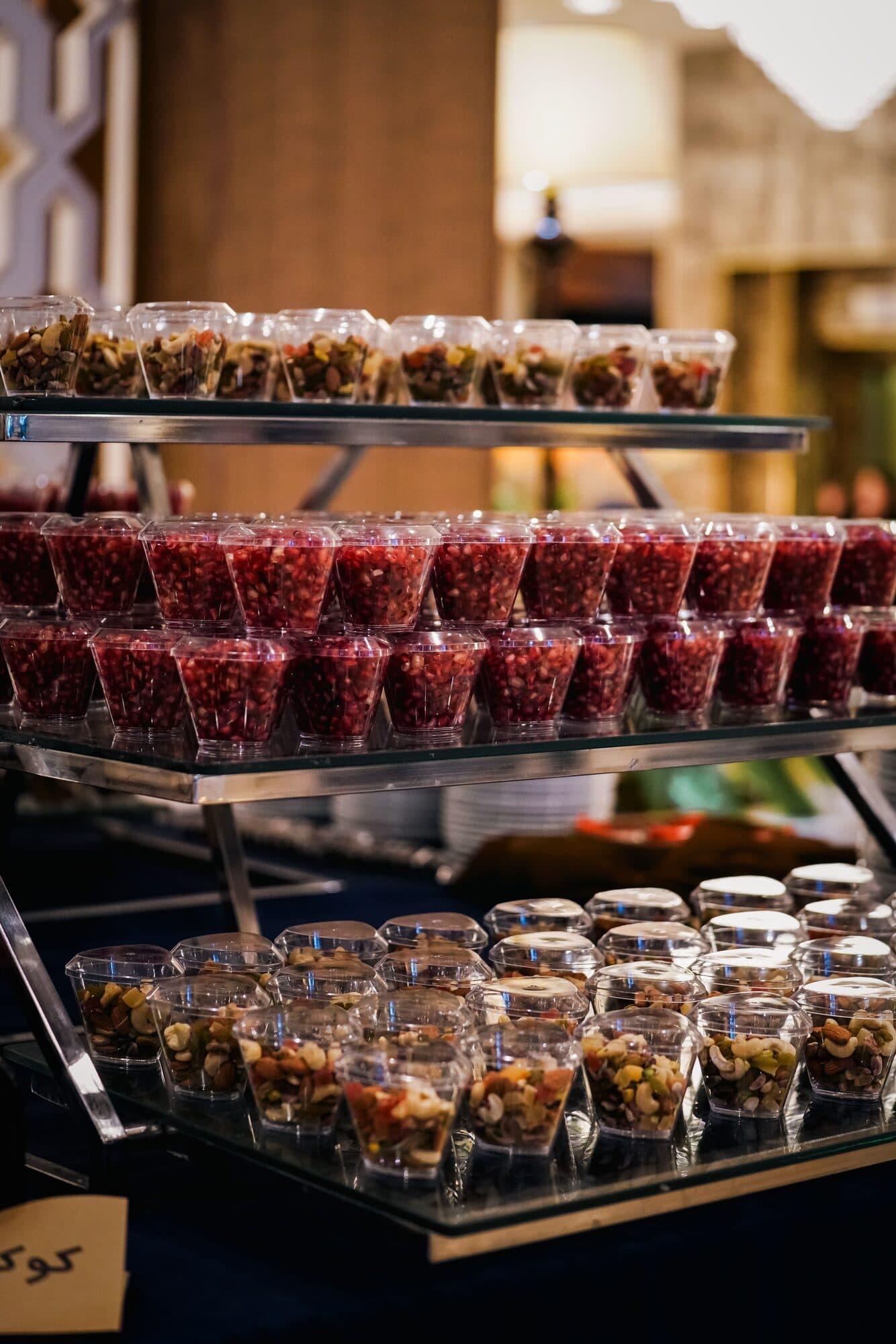
A Yalda reception first — the red fruit, the nuts, the table, the things every person in that room had grown up with. Then live music. Then stand-up comedy. Then dinner at the end, late, the way Yalda is supposed to run long.
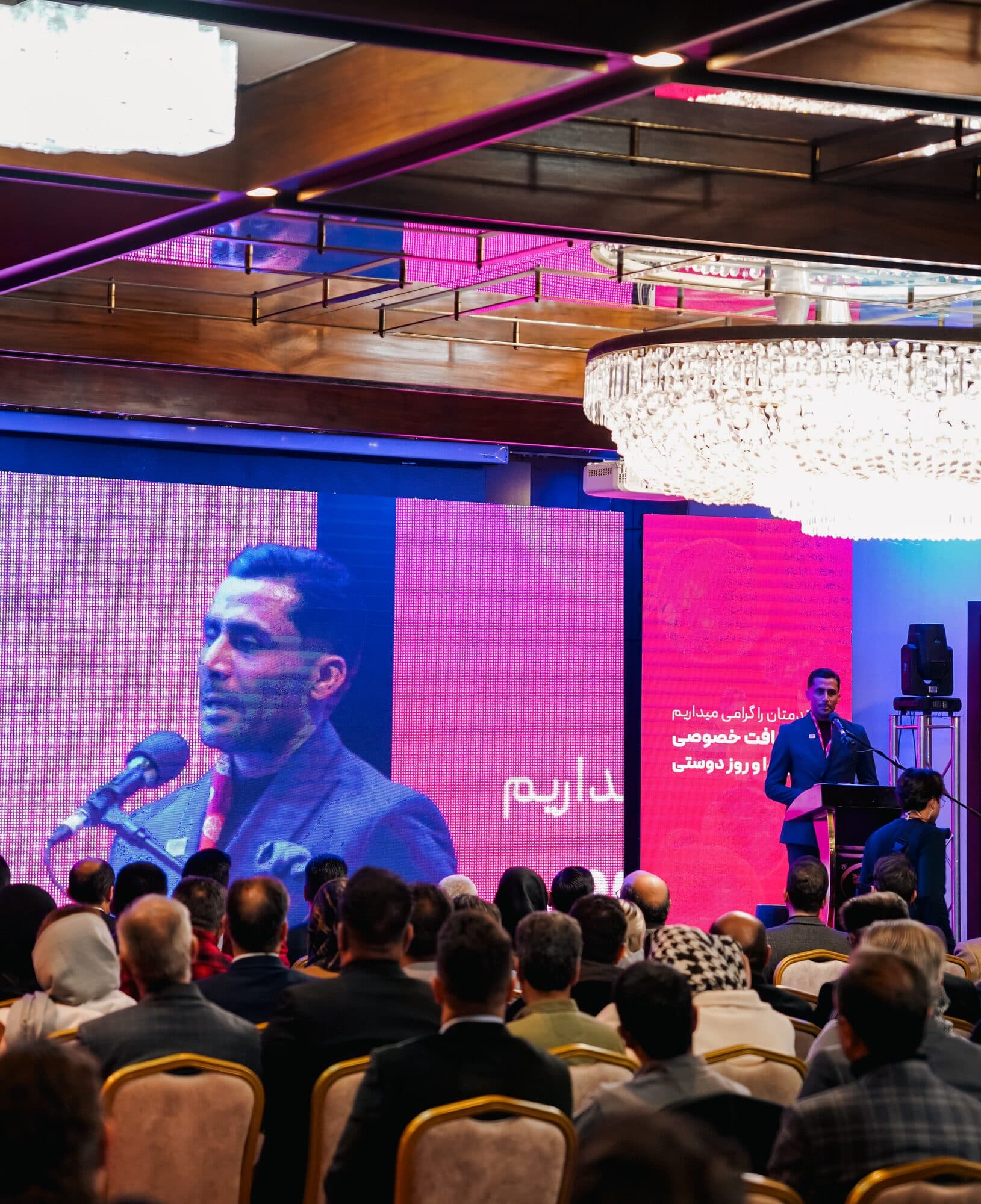
What is absent from that list is the point. No product presentation. No opening speech about the state of the industry. No ceremony of calling six sponsors to the stage one at a time to be thanked while the room waits. The evening had one job — to be a good night — and everything that competed with that job was removed from the schedule rather than shortened.
The programme, Yalda Night, December 2023Persian audio. No subtitle track yet. 06
Use comedy to flatten the room.
The building industry is strictly hierarchical. An investor, a developer and a young architect do not talk to each other as equals in a meeting, and putting them in one room does not by itself change that.
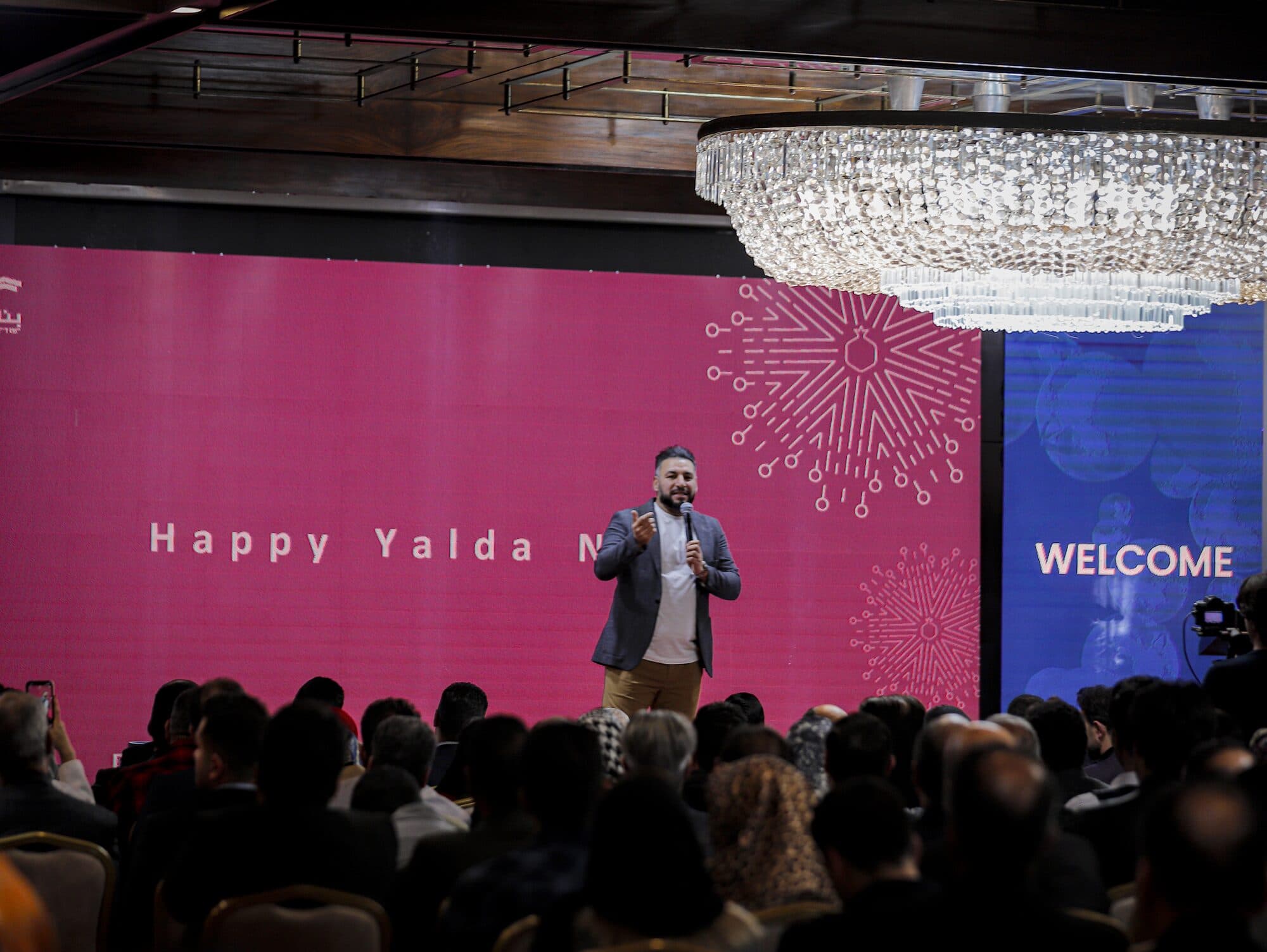
Comedy does. A room that laughs together at the same moment has, for that moment, no seniority in it — and the conversation that starts afterwards begins from a different place than the conversation that starts after a keynote. Booking a comedian for a room of senior industry figures is a real risk, and it is the correct one: the alternative is a room of people networking in the register they use at work, which is exactly the room they were trying to get out of that evening.
07
Give the sponsor a designed space, not a stand.
Each sponsor was introduced, and introduced properly — but through the design of the evening rather than through a table with brochures on it. The brand was present in the way a host is present in their own home: in the arrangement, in the reception, in who they were standing with, in the space allotted to them.
Thirty Nights of Nowruz divided the nights, so that one host could be genuinely present at every one of them. Yalda Night divided the hosting, so that one night could hold three hundred and sixty people and still feel personal to each of them. A format is not a preference. It is an answer, and the question changes.
The detail that mattered
Every event of this kind has a photo wall: a branded backdrop near the entrance, printed with the sponsors' logos in a repeating grid, whose function is to guarantee that any photograph of a guest also contains the people who paid for the evening. Everyone in the industry has stood in front of one. Very few remember doing it.
We did not build one. We built the tomb of a poet instead.
It was placed at the centre of the lobby rather than against a wall, so it could be approached and photographed from any side. Nobody had to wait a turn and no photographer had to organise anyone, and almost every guest was photographed there.
Look at what those photographs contain. A guest, at ease, on the longest night of the year, standing at the monument of the poet whose book their family opens on exactly this night. Look at what they do not contain: a single sponsor logo.
That is not a failure of the sponsorship. That is the sponsorship working.
The six brands gave up the one surface they would normally have insisted on — the backdrop in every photograph — and in exchange their most important clients went home with the best picture of their evening, taken at an event those brands had invited them to. A logo in that frame would have cost the picture. And a picture that is kept, sent home and posted the next morning does more for a brand than a picture taken only because somebody asked for it.
What happened
- Guests
- 360
- Editions delivered
- 3
- Sponsors
- 6, selected and filtered
- Invitation acceptance rate
- 95%
- Share of the guest list chosen by the organiser
- None — divided among the six sponsors
- Paid by guests
- Nothing
- Share of the evening funded by sponsors
- 100%
- Sold on the night
- Nothing
How we knew
Ninety-five per cent is the result, and it is worth sitting with. A free invitation is the easiest thing in the world to accept and the easiest thing in the world to ignore; senior people in December decline almost everything. Ninety-five per cent acceptance is not a measure of how good the evening was — nobody had seen it yet. It is a measure of who did the asking. People do not clear an evening for an event company. They clear it for the partner they have worked with for eleven years, who has never asked them for anything socially before. The invitation mechanic and the acceptance rate are the same fact, seen from two ends.
The format was rebuilt twice. Three editions is not a claim about quality; it is a claim about economics. A format that costs its organiser nothing and its guests nothing does not need to be justified to a budget committee each year. It only needs six brands to want it again.
More frames from the evenings
What this means if you are not running a Persian festival
The ritual was Iranian. The economics are not.
01
Your sponsor's problem is depth, not reach.
Almost every business-to-business sponsor is buying awareness to solve a relationship problem. Ask any prospective partner a single question — which twenty customers matter most to you next year? — and then design something for those twenty. You will be selling against a media plan with a proposition a media plan cannot answer.
02
Sell the hosting, not the surface.
A logo is a surface, and surfaces are commodities: there is always a cheaper one. Hosting is not a commodity. Give a sponsor a role, a guest of their own and something to do, and you have sold them a thing no other event can price against.
03
Whoever sends the invitation determines who comes.
This is the transferable core of the whole case. An invitation from you is an offer; an invitation from a guest's own trusted partner is a favour between people with history. The second one clears a calendar. If your event needs a room full of people who are hard to reach, stop trying to reach them — find the six organisations that already have them and let them do the inviting.
04
Cap your partners on purpose, and say why.
Volume is the natural drift of every sponsorship business, and it erodes the product being sold. Being one of six is a position. Being one of ninety is a line in a programme. The cap is not a concession you make to quality; it is the thing you are charging for.
05
Design the first four seconds harder than the keynote.
A guest reaches a verdict at the door and spends the rest of the evening confirming it. Most event budgets are distributed in exactly the opposite proportion.
06
Build the thing people want to be photographed with, and keep your logo out of it.
A branded backdrop produces images nobody keeps. An object worth standing next to produces images that are kept, sent and posted — and the brand that is credited is the one whose invitation put the guest there. You lose the impression and gain the memory. That trade is almost always correct.
07
Programme the register, not the agenda.
Decide what the room should feel like, then delete everything that fights it — including the parts that flatter you. The stage segment where sponsors are thanked one by one is the clearest example of an event serving its organiser rather than its room.
08
An evening that costs the host nothing can be repeated.
Most good corporate formats do not end because they failed; they end because they were a cost line in a year when costs were cut. Build the funding into the design and the format outlives the budget cycle. That is not a finance decision. It is what allows a thing to become a tradition.
09
If you can convene a market, you never have to buy attention in it again.
The convener is the only party in any industry who is not competing for the room's attention, because the convener is the reason the room exists.
We did not sell six brands a place at our event. We sold them an evening with their own most important clients, and then built the evening those clients actually wanted to attend. The room held three hundred and sixty people. Not one of them was invited by us — and ninety-five per cent of them came.
You already know what you need.
Forty-five minutes, the real problem, a point of view and a first move.