Ventures/2026 —
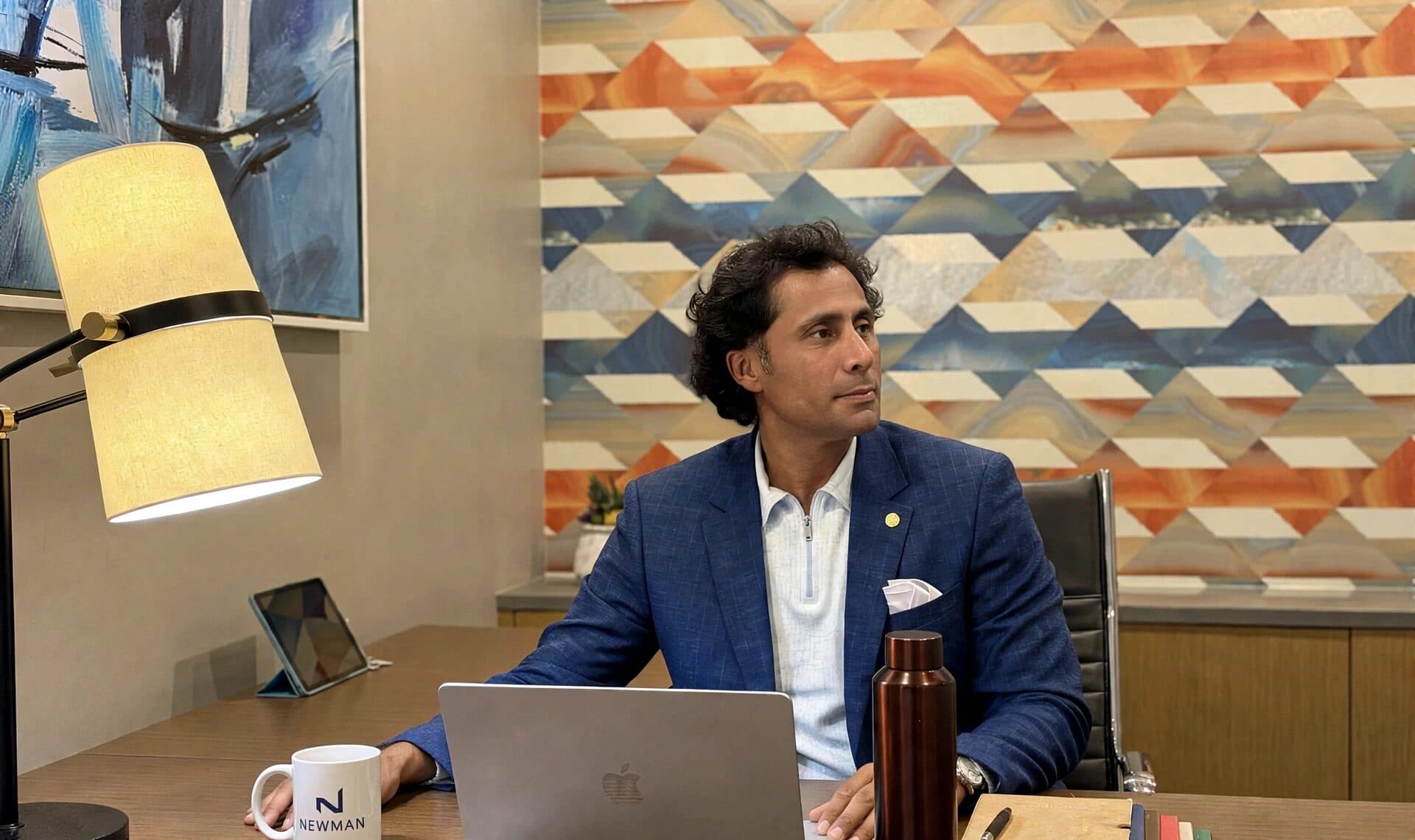
NEWMAN
The experience arm, built for the American market.
- Discipline
- Experiences, Events & Business Intelligence, California
- Status
- In registration, 2026
- Years
- 2026 —
NEWMAN is the operating company for Intelligent Experiences: launches, brand activations, executive offsites and high-touch events for organisations that need the room to do actual work, not just look expensive.
It carries the WINDOW methodology forward — curated audiences, designed guest journeys, spaces built around a strategic idea — and adds the layer that was not available in 2020. AI is used before the event to sharpen who is in the room, during it to personalise the journey, and after it to turn a night into a pipeline.
NEWMAN is in registration in 2026. Engagements are currently taken directly through KAY.
Capabilities
- Launches & brand activations
- Executive offsites
- Guest journey design
- AI-assisted personalisation
- Production & on-site flow
- Post-event amplification
Four parts
One company, four parts.
One company answering the whole question: the position, the language it is said in, the room it is said in, and the reporting that tells you whether any of it worked.
- 01
Strategy
Positioning decided before anything is designed.
Business and growth strategy that starts from the real constraint, not the brief. What the room is for is settled before a single element of it is drawn.

- 02
Brand
Language the market can repeat back.
Brand architecture, positioning and messaging built so that the market can repeat it back to you without your help — which is the only test a position ever really passes.

- 03
Experience
Curated rooms, measured outcomes.
Premium events and brand experiences designed as systems — curated audiences, choreographed guest journeys, measured outcomes. This is the WINDOW methodology, carried forward for launches, activations and executive offsites.

- 04
Business Intelligence
Intelligence as infrastructure, not as a theme.
The AI and business-intelligence practice, built on an MBA in Business Analytics and fifteen years of running commercial operations that had to produce measurable results. Most intelligence work is either numerate and toneless, or well-judged and unmeasured; the combination is the point. Five services, each built to keep working after the engagement closes — because a system that depends on the person who built it was never a system.

How the four connect
Starts from
A company with a growth question, and four suppliers who each own a quarter of the answer.
01
Strategy
Hands on
A position, and the constraint it was chosen against.
02
Brand
Hands on
Language the room will already be using before you walk into it.
03
Experience
Hands on
A room that carried it, and a record of what actually happened in there.
04
Business Intelligence
Hands on
Reporting that says whether any of the other three worked.
You are left with
One accountable party for all four — which is the only arrangement in which the joins between them are anybody's job.
What goes back
Part 04 is what makes 01 possible a second time: the next position is argued from what the last room actually did, rather than from what everyone remembers about it.
The five services
What the intelligence work actually does.
- 01
Business Intelligence
Reporting an executive actually reads.
Most dashboards answer questions nobody asked. The work starts from the decisions a business actually makes each month, then builds the smallest reporting layer that makes those decisions faster — one source of numbers, defined once, that finance and operations both recognise.
You are left with
A defined metric set, a reporting cadence, and the dashboard that serves it.
- 02
AI Workflow Design
The system around the tool, not the tool.
The gap in most businesses is not access to AI — it is the absence of a system around it. Tools get adopted, nothing changes, and the conclusion drawn is that the technology was overstated. This work maps where judgement is actually spent, then designs the handoffs so the model does the part it is good at and a person keeps the part that carries risk.
You are left with
A documented workflow, the prompts and guardrails behind it, and an owner on the team.
- 03
Growth Systems
Infrastructure, not campaigns.
A campaign ends. A system compounds. The engagement builds the measurement, the feedback loop and the operating rhythm that let a company tell the difference between a channel that is working and one that is merely busy — and then act on the answer without waiting for a quarterly review.
You are left with
An instrumented funnel, a review cadence, and the decisions each stage is allowed to make.
- 04
Content & Marketing Automation
Output that keeps its voice at volume.
Automation usually costs a brand its voice — the volume rises and the writing flattens. The system here starts from the brand's own language, encodes it as constraints rather than templates, and keeps a human at the point of publication, so scale does not read as sameness.
You are left with
A voice specification, the production pipeline that honours it, and a publication checkpoint.
- 05
Team Enablement
A system nobody can run is not a system.
The bias throughout is toward systems that keep working after the consultant leaves. That means the team is trained inside the build rather than handed a document at the end — they operate it while it is still being shaped, and the parts nobody uses get removed before handover instead of after.
You are left with
A trained operator on the team and the runbook they wrote while learning it.
The order they get built
Starts from
A business with more data than decisions, and tools nobody has been made responsible for.
01
Business Intelligence
Hands on
A defined metric set, a reporting cadence, and the dashboard that serves it.
02
AI Workflow Design
Hands on
A documented workflow, the prompts and guardrails behind it, and an owner on the team.
03
Growth Systems
Hands on
An instrumented funnel, a review cadence, and the decisions each stage is allowed to make.
04
Content & Marketing Automation
Hands on
A voice specification, the production pipeline that honours it, and a publication checkpoint.
05
Team Enablement
Hands on
A trained operator on the team and the runbook they wrote while learning it.
You are left with
Five services that compose into one operating layer — each with an owner on your team rather than on mine.
What goes back
They are numbered in the order they get built, not in order of importance. Reporting comes first because everything after it is judged by it.
The rooms themselves

Next