Services
Clearer strategy. Stronger brands. Smarter growth.
Every business faces a different challenge. Some need a stronger brand, others a clearer path to growth or smarter systems built on AI. KAY brings strategy, brand experience, marketing and intelligent technology together, so you can see what matters most and build the right solution around it.
Three paths
Three ways to work together.
01
Brand & Experience
Make your brand distinctive.
Brand strategy, messaging and the experiences that carry them — launches, events and the moments people remember.
- What it solves
- Your team describes the business three different ways, and the market cannot say what sets you apart.
- What you are left with
- One position your team and your market say the same way — and the launches and experiences that prove it.
- For example
- Brand strategy & positioning
- Messaging & brand architecture
- Brand experience & experiential marketing
- Events & signature experiences
- Brand launches
02
Growth & Marketing
Turn strategy into growth.
Marketing and growth strategy, the offer and the route to market — and the numbers your decisions are made from.
- What it solves
- You are spending on growth, and you cannot say which part of the spend is working — or what to decide next.
- What you are left with
- A written diagnosis, an offer the market understands, and a short set of numbers your next decisions are made from.
- For example
- Marketing & growth strategy
- Offer & go-to-market strategy
- Customer acquisition & conversion
- Market entry, East to West
- Marketing performance measurement
03
AI & Automation
Make your business work smarter.
AI assistants, automation, CRM, websites and reporting — built so your team can run them after we leave.
- What it solves
- Leads wait in inboxes, the same questions are answered by hand, and the reports do not help anyone decide.
- What you are left with
- Assistants, automation and a CRM your team runs itself, and reporting that is read before a decision, not after it.
- For example
- AI strategy & workflow design
- AI assistants
- Automation & CRM
- Business intelligence & reporting
- Websites
Each path covers more than its examples. The final solution is set by the problem in your business rather than by a menu — and paths can be combined.
Not sure where to start?
Tell us what you are trying to improve.
Choose the sentence closest to where you are, or answer six short questions. If none of them fits, ask the assistant, or book a call and we will find the starting point together.
- Your team describes the business three different ways, and the market cannot say what sets you apart.Brand & Experience
- You are spending on growth, and you cannot say which part of the spend is working — or what to decide next.Growth & Marketing
- Leads wait in inboxes, the same questions are answered by hand, and the reports do not help anyone decide.AI & Automation
Proof
The work, with the thinking left in.
Three brand and experience cases. Each one opens the full account.
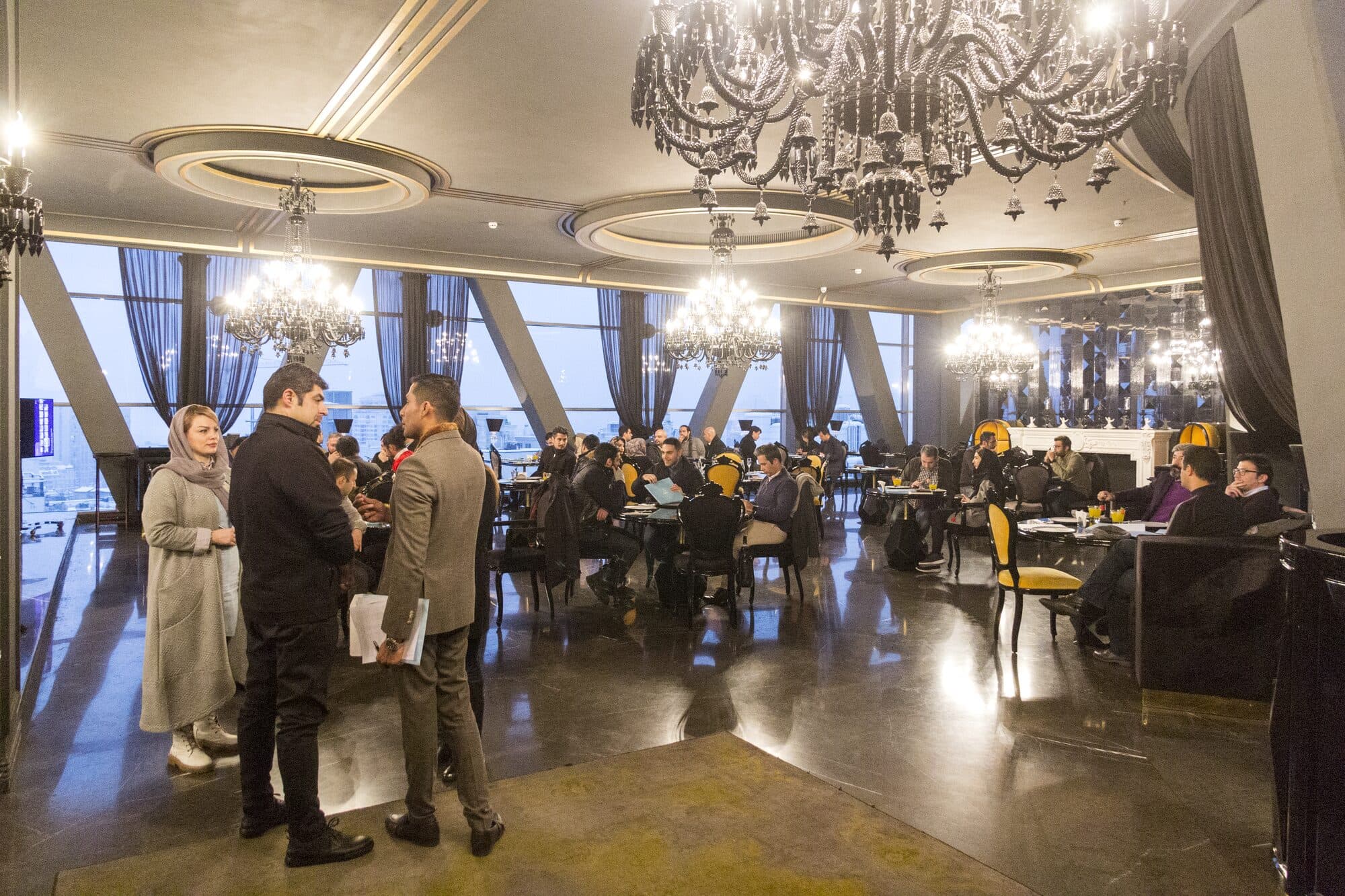
Brand launch & market entry
Nobody Buys a First Edition
- Challenge
- For a brand with no history, the standard launch machine asks the customer to absorb your risk and pays them for it in discount — and the moment a market meets you at a discount, it files you permanently in the category that discount belongs to.
- Strategy
- The only way to make a standard credible before it exists is to build a small, complete, finished instance of it, and put the people whose money you need physically inside it.
- Execution
- Frame it as a chapter, not a launch.
- Put the architect on the stage. Never the sales team.
- Choose the room before you write the message.
- Result
- A new exhibition brand with no history launched at the top of its market — and sold nothing on the night.

Experience design
Thirty Nights of Nowruz
- Challenge
- Both options optimise the same wrong variable. They optimise coverage — how many people were reached. Neither of them optimises contact — how many people were actually spoken to.
- Strategy
- The scarce resource in a relationship business is never the guest list. It is the host's attention. So we stopped designing around the guests and started designing around the scarcity.
- Execution
- Invert the ratio.
- Host at home.
- Book the month nobody wants.
- Result
- One large year-end gala, replaced by thirty small ones — and not a single gift shipped.

Sponsorship experience design
In Praise of the Longest Night
- Challenge
- A materials manufacturer does not have an awareness problem. It has a depth problem — and sponsorship is sold to it as surface area, priced by the size of a logo.
- Strategy
- We stopped selling exposure and started selling hosting. The capacity was divided six ways and each sponsor filled its own share — so every brand arrived to host its most important clients, and left having met the most important clients of five others.
- Execution
- Divide the guest list among the sponsors.
- Make the sponsor a host, not an advertiser.
- Cap the sponsors at six.
- Result
- Ninety-five per cent of everyone invited came, and not one of them was invited by us. That number is not a measure of the evening — nobody had seen it yet. It is a measure of who did the asking.
How we work
One method, every engagement.
01
Diagnose
Understand the real challenge, the market context and the hidden friction. Most briefs describe a symptom.
02
Position
Define the point of view, the offer and the message that should lead the conversation. Positioning is the art of strategic sacrifice.
03
Design
Build the brand, the experience or the system around a clear strategic direction — never around a template.
04
Deploy
Execute with quality, pace and operational discipline. This is the step most strategy work never reaches.
05
Grow
Learn, optimise and expand what works. Measurement is not a report at the end; it is how the next decision gets made.