Field note 01
The Best Experience Designers in America Don't Work in Marketing
5 min read
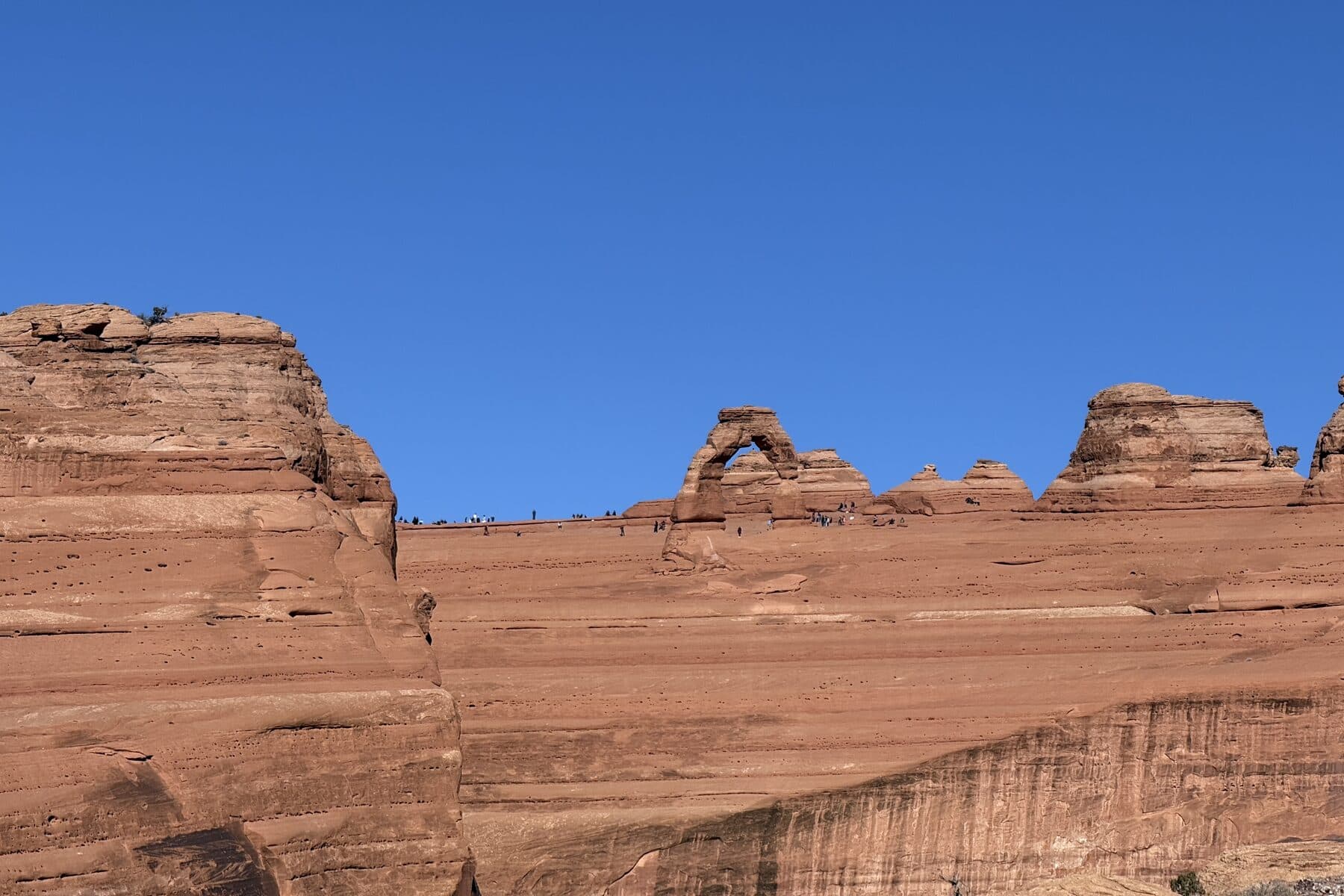
What twenty national parks taught me about arrival, sequence, and the engineering of awe.
You cannot see the Grand Canyon from the parking lot.
That is not an accident of geology. You park, you walk through a corridor of trees and low buildings that tell you almost nothing, and then the ground disappears. The reveal is engineered. Somebody decided you would not be allowed to see it early.
Now hand the same site to a marketing team. There would be a billboard of the canyon at the entrance gate, a second one on the path, and a sponsor logo on the railing. We would have spent the entire budget showing you the thing, and destroyed the only moment that mattered.
I have now been to twenty national parks across thirty states. I went for the hiking. I stayed for the design.
1. The threshold is doing more work than you think. Every park makes you stop at a gate. You slow to a crawl, someone hands you a folded map, and a sign tells you exactly where you are. Commercially it is a toll booth. Experientially it is a decompression chamber — it ends whatever you were doing in the car and starts something else. Most brands have no threshold at all. The customer arrives mid-sentence.
2. Sequence is a decision, not a floor plan. Overlook first and then the trail is a completely different experience from the trail and then the overlook. Same assets, different story. In events we call this “the route” and treat it as a logistics problem to be solved by whoever is free. It is not logistics. It is the script.
3. One system, four hundred sites. In 1977, Massimo Vignelli designed the Unigrid — a single grid system for the printed guides of every park in the country. Decades later it still holds. Yellowstone and a small historic site in Ohio print on the same skeleton, and both feel like the same institution took care of them. That is what a design system is actually for: surviving contact with a junior employee and a deadline. Almost no brand I meet has one that does.
4. Restraint is a feature. At the viewpoint there is no music, no screen, no QR code, no upsell. The Park Service holds the highest-value emotional real estate in America and chooses not to monetise the moment. Compare that with the average product launch, where the emotional peak of the evening is also where we schedule the sponsor reel.
5. The best experiences never announce that they were designed. Nobody leaves Zion talking about wayfinding. They talk about the light. That is the entire job — the engineering disappears and only the feeling is left. When a client tells me an event “just felt effortless,” that is not a compliment about the atmosphere. It is a report on the construction.
If you don't run parks
Every one of those is a brand problem wearing a hat. Where does your customer cross the threshold, and does anything actually happen there? Who chose the order of what they see? Does your system hold when you are not in the room? And where are you monetising a moment you should be protecting?
I spent fifteen years building events for a living, and I still learn more in a weekend at a park entrance station than in most conference sessions. The best experience designers in America are wearing flat hats and handing out folded maps, and not one of them has ever called themselves a designer.
- Experience Design
- Brand Strategy
- Field Notes